
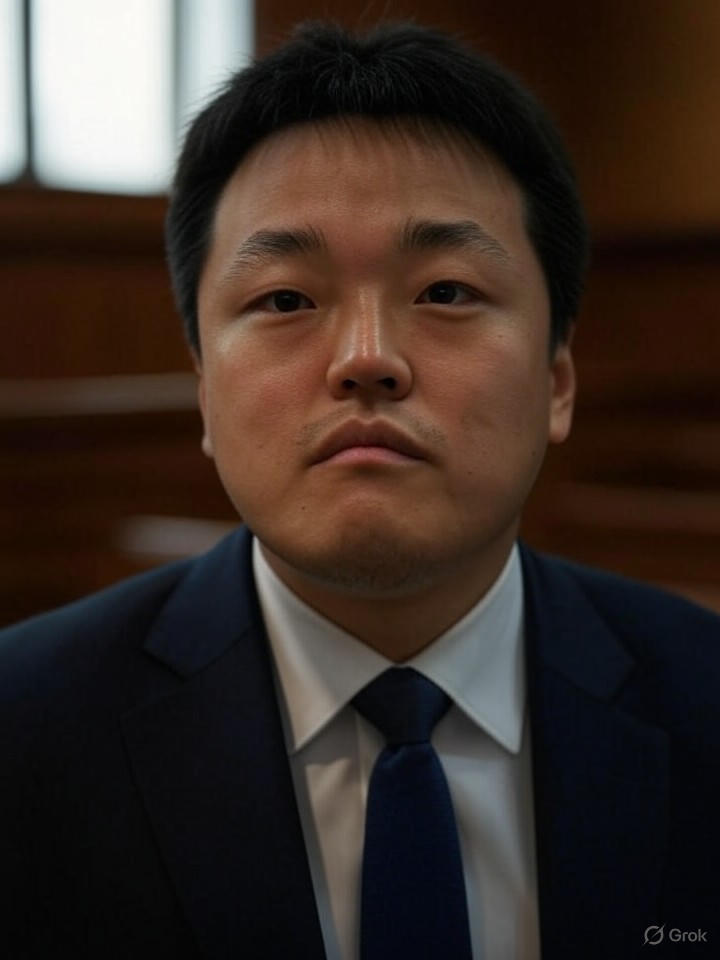
In a significant development that concludes a notable saga in the cryptocurrency realm, Do Kwon, co-founder of Terraform Labs, entered a guilty plea on Tuesday to charges of conspiracy and wire fraud linked to the staggering $40 billion collapse of the TerraUSD stablecoin in 2022. This plea was made in a federal court in Manhattan, representing a remarkable shift for Kwon, who previously resisted extradition and maintained his innocence following his arrest in Montenegro in 2023. Prosecutors alleged that Kwon masterminded a scheme that misled investors regarding the stability of TerraUSD (UST), an algorithmic stablecoin aimed at maintaining a $1 value through its association with the Luna token. The collapse of UST not only wiped out billions for investors but also initiated a series of failures throughout the cryptocurrency industry, including the demise of FTX.
Once regarded as a pioneer in decentralized finance, Kwon appeared before U.S. District Judge Paul A. Engelmayer, where he admitted to defrauding investors by falsely claiming UST’s stability. According to court documents referenced in a Bloomberg report, Kwon indicated his desire to change his plea just hours before the hearing, moving away from the not-guilty position he had upheld since his arraignment in January 2025. The charges he faces could result in a prison term of up to 25 years, although legal experts predict a potentially reduced sentence due to his cooperation. Kwon’s legal representatives opted not to comment after the hearing, but insiders suggest that the plea agreement might include provisions for restitution to the investors affected.
The Rise and Catastrophic Fall of Terra: A Cautionary Tale in Crypto Innovation
To fully grasp the significance of Kwon’s guilty plea, it is essential to revisit the rapid rise and subsequent fall of the Terra ecosystem. Established in 2018 by Kwon and Daniel Shin, Terraform Labs aimed to revolutionize stablecoins by eliminating the need for traditional reserves and instead relying on algorithmic mechanisms linked to Luna. By early 2022, UST had achieved a market capitalization exceeding $18 billion, drawing in both retail and institutional investors with yields from the Anchor Protocol that surpassed 20%. However, the system’s reliance on constant growth proved to be its downfall when market pressures led to UST losing its peg in May 2022, igniting a catastrophic spiral that erased $40 billion in value almost instantaneously. The repercussions were extensive; as reported by CoinDesk, this collapse deepened the ongoing crypto winter, resulting in the bankruptcy of firms like Three Arrows Capital and Voyager Digital. In response, regulators around the globe heightened their scrutiny, with the U.S. Securities and Exchange Commission (SEC) filing simultaneous civil charges against Kwon, which were settled earlier this year for $4.5 billion. Kwon’s journey—from fleeing South Korea to being detained in Montenegro—involved the use of forged passports and a series of international legal conflicts, highlighting the complexities involved in prosecuting financial crimes that transcend borders.
Extradition Battles and the Path to Accountability
Kwon’s path to a courtroom in the U.S. was marked by diplomatic complexities. He was arrested in March 2023 while attempting to board a flight with counterfeit documents and subsequently spent more than a year in detention in Montenegro, as South Korea and the U.S. both pursued his extradition. Ultimately, Montenegro chose to extradite Kwon to the U.S. in late 2024, leading to his arrival in New York in December. Social media posts, particularly from users on X (formerly Twitter), reflected public sentiment, with many expressing relief at Kwon’s plea, viewing it as a form of closure for those who lost their savings. One widely circulated post highlighted the irony of Kwon’s previous arrogance on social media, where he often dismissed critics during Terra’s peak. Industry experts regard this moment as crucial for the future of crypto regulation. Prosecutors pointed out that Kwon and his associates manipulated markets by secretly bolstering UST through undisclosed trading activities, a strategy revealed during Department of Justice investigations. Reports from Seeking Alpha indicate that the plea includes admissions of wire fraud through deceptive communications and conspiracy to defraud via inaccurate representations of Terra’s technology. This outcome could establish precedents for future legal actions, potentially pressuring other crypto founders to emphasize transparency as regulatory scrutiny intensifies.
Implications for the Crypto Industry and Investor Protections
While the specifics of the plea deal remain confidential, analysts speculate that it may involve Kwon providing testimony against former colleagues, potentially unraveling additional aspects of the Terra fiasco. For the cryptocurrency industry, which is still recuperating from the upheaval of 2022, this resolution underscores the necessity for enhanced oversight. Venture capitalists and developers are now adopting a more cautious approach to algorithmic innovations, shifting focus towards asset-backed stablecoins like USDC and Tether. Advocacy groups representing the victims—thousands of individuals affected by the financial collapse—welcomed the plea but urged for expedited compensation. Kwon’s sentencing is anticipated in December 2025, with Judge Engelmayer indicating that expressions of remorse will be a significant consideration. Prosecutors characterized the case as a “landmark” moment in the effort to hold crypto executives accountable. As the situation unfolds, Kwon’s dramatic decline serves as a poignant reminder that in the volatile domain of digital assets, innovation devoid of ethical considerations can lead to catastrophic outcomes.
Looking Ahead: Regulatory Ripples and Market Recovery
The aftermath of the Terra incident has ignited discussions around legislative reforms, including proposed bills in the U.S. aimed at regulating stablecoins. Observers of the industry, referencing sentiments shared on X that reflect trader skepticism, speculate that tighter regulations could hinder creativity but ultimately strengthen trust within the market. Kwon’s guilty plea may expedite these regulatory changes, ensuring that forthcoming projects are subject to rigorous scrutiny. Meanwhile, remnants of the original Terra, now rebranded as Terra 2.0, persist within niche markets, serving as a faint reminder of what was once a $60 billion enterprise. For those within the industry, this chapter concludes with a blend of validation and caution, indicating that accountability is increasingly becoming a reality in the challenging landscape of cryptocurrency.


